


Introduction
Digital transformation has fundamentally changed the way businesses and consumers interact. From online shopping and banking transactions to digital entertainment and remote work, technology has become deeply integrated into everyday life. While these innovations improve efficiency and convenience, they also create new opportunities for fraudsters.
As organizations increasingly rely on digital platforms, cybercriminals continue to develop more advanced fraud techniques. Traditional fraud methods are rapidly evolving into sophisticated digital fraud attacks that target sensitive data, financial transactions, customer identities, and business operations.
To combat these risks, businesses must adopt modern fraud detection and fraud prevention technologies capable of identifying suspicious activities before damage occurs. Understanding how fraud works, the risks involved, and the technologies available is essential for protecting both businesses and customers.
This comprehensive guide explains fraud detection, common fraud types, modern fraud prevention technologies, and the best strategies businesses can use to reduce fraud risks.

What Is Fraud and Fraud Detection?
What Is Fraud?
Fraud refers to any illegal or unethical activity designed to deceive individuals or organizations for financial gain, unauthorized access, or other malicious purposes. Fraud can occur across many industries and digital environments, including banking, e-commerce, insurance, fintech, travel, gaming, and telecommunications.
Fraud can involve:
- Credit card theft
- Identity theft
- Promotion abuse
- Account takeover
- Money laundering
- Data breaches
- Booking fraud
- Phishing attacks
- Synthetic identity fraud
The consequences of fraud extend far beyond financial loss. Businesses may also suffer:
- Reputational damage
- Loss of customer trust
- Regulatory penalties
- Operational disruption
- Loss of business opportunities
One of the most critical aspects of fraud prevention is detecting fraudulent activity before it causes irreversible damage. Once fraud occurs, recovering financial losses and rebuilding customer trust can be extremely difficult.
For example, if an e-commerce company experiences a customer data breach, legal action alone cannot repair reputational damage or restore customer confidence. This is why proactive fraud detection solutions are essential for modern businesses.
What Is Fraud Detection?
Fraud detection is the process of identifying suspicious activities, abnormal behaviors, and potentially fraudulent transactions before they cause harm. Fraud detection systems analyze customer behavior, transaction patterns, device information, and risk indicators to determine whether an action is legitimate or malicious.
Modern fraud detection systems use technologies such as:
- Machine learning
- Artificial intelligence
- Behavioral analytics
- Fraud graphs
- Rule-based engines
- Real-time transaction monitoring
- Device fingerprinting
- Risk scoring
Fraud detection solutions can be customized for different industries and use cases. As digital fraud techniques become more sophisticated, fraud detection technologies continue to evolve to stay ahead of emerging threats.
Effective fraud detection systems should:
- Detect fraud in real time
- Reduce false positives
- Adapt to new fraud patterns
- Protect customer experience
- Scale with business growth
- Integrate easily with existing systems
Why Businesses Need Fraud Detection
Manual fraud monitoring alone is no longer sufficient for modern businesses. Fraud analysts cannot process millions of transactions as quickly or accurately as AI-powered fraud detection systems.
Advanced fraud detection platforms help organizations:
- Monitor transactions in real time
- Detect abnormal customer behavior
- Automatically block suspicious activities
- Reduce manual investigations
- Improve operational efficiency
- Minimize fraud losses
- Protect customer trust
Benefits of Fraud Detection Technology
Real-Time Risk Detection
Fraud detection systems continuously monitor activities and instantly identify suspicious transactions before financial losses occur.
Reduced False Positives
Machine learning models improve detection accuracy and reduce unnecessary alerts that negatively affect customer experience.
Improved Operational Efficiency
Automation reduces the workload of fraud analysts, allowing teams to focus on high-risk cases instead of manual reviews.
Adaptive Fraud Prevention
Businesses can quickly update rules and workflows to respond to emerging fraud techniques.
Better Customer Experience
Accurate fraud prevention reduces friction for legitimate customers while maintaining strong security standards.
Scalable Security
Modern fraud detection platforms can process massive transaction volumes without sacrificing performance.
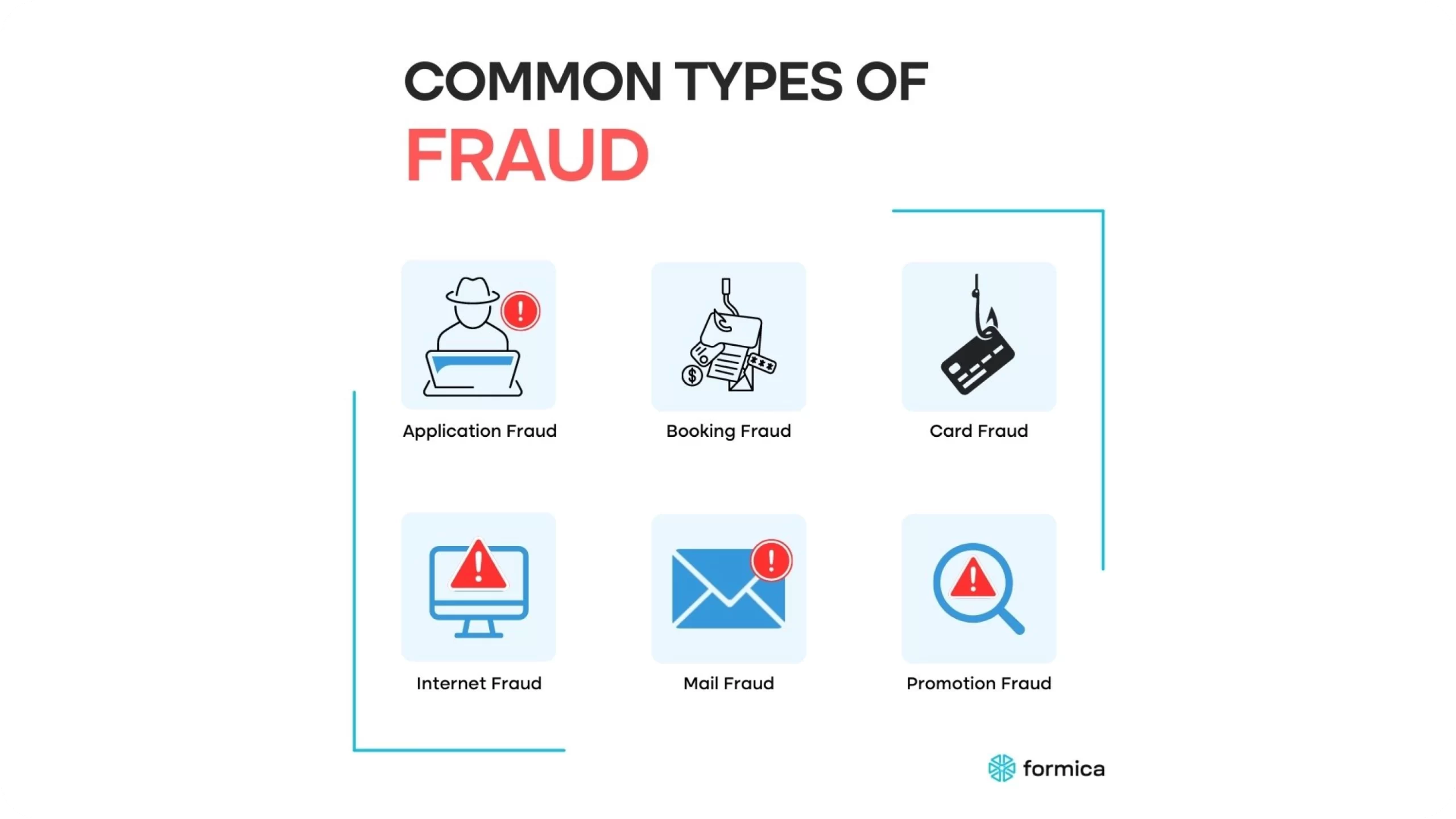
Common Types of Fraud
Understanding common fraud types is essential for building an effective fraud prevention strategy.
Application Fraud
Application fraud occurs when fraudsters use stolen, fake, or synthetic identities to gain unauthorized access to products or services.
Common examples include:
- Fake account creation
- Synthetic identities
- Loan application fraud
- Identity impersonation
Booking Fraud
Booking fraud is common in industries such as travel, hospitality, and ticketing. Fraudsters exploit reservation systems, stolen payment methods, or fake identities to abuse services.
Businesses must monitor customer activities closely to prevent booking abuse and financial losses.
Debit and Credit Card Fraud
Credit card fraud remains one of the most widespread forms of financial crime. Fraudsters exploit stolen card details, card-not-present transactions, and payment vulnerabilities.
Real-time transaction monitoring is essential for detecting suspicious card activity before transactions are completed.
Internet Fraud
Internet fraud includes phishing attacks, malware distribution, fake websites, and online scams designed to steal sensitive information.
Businesses and individuals can reduce risks by:
- Updating software regularly
- Avoiding suspicious links
- Verifying email sources
- Using multi-factor authentication
Mail Fraud
Mail fraud involves fraudulent emails designed to steal personal information, credentials, or money.
Common examples include:
- Phishing emails
- Fake invoices
- Email account takeover
- Business email compromise
Promotion Fraud
Promotion fraud occurs when users abuse discounts, referral programs, bonuses, or promotional campaigns.
Businesses can reduce promotion abuse by:
- Monitoring user behavior
- Limiting promotions by IP or device
- Using identity verification
- Applying risk scoring models
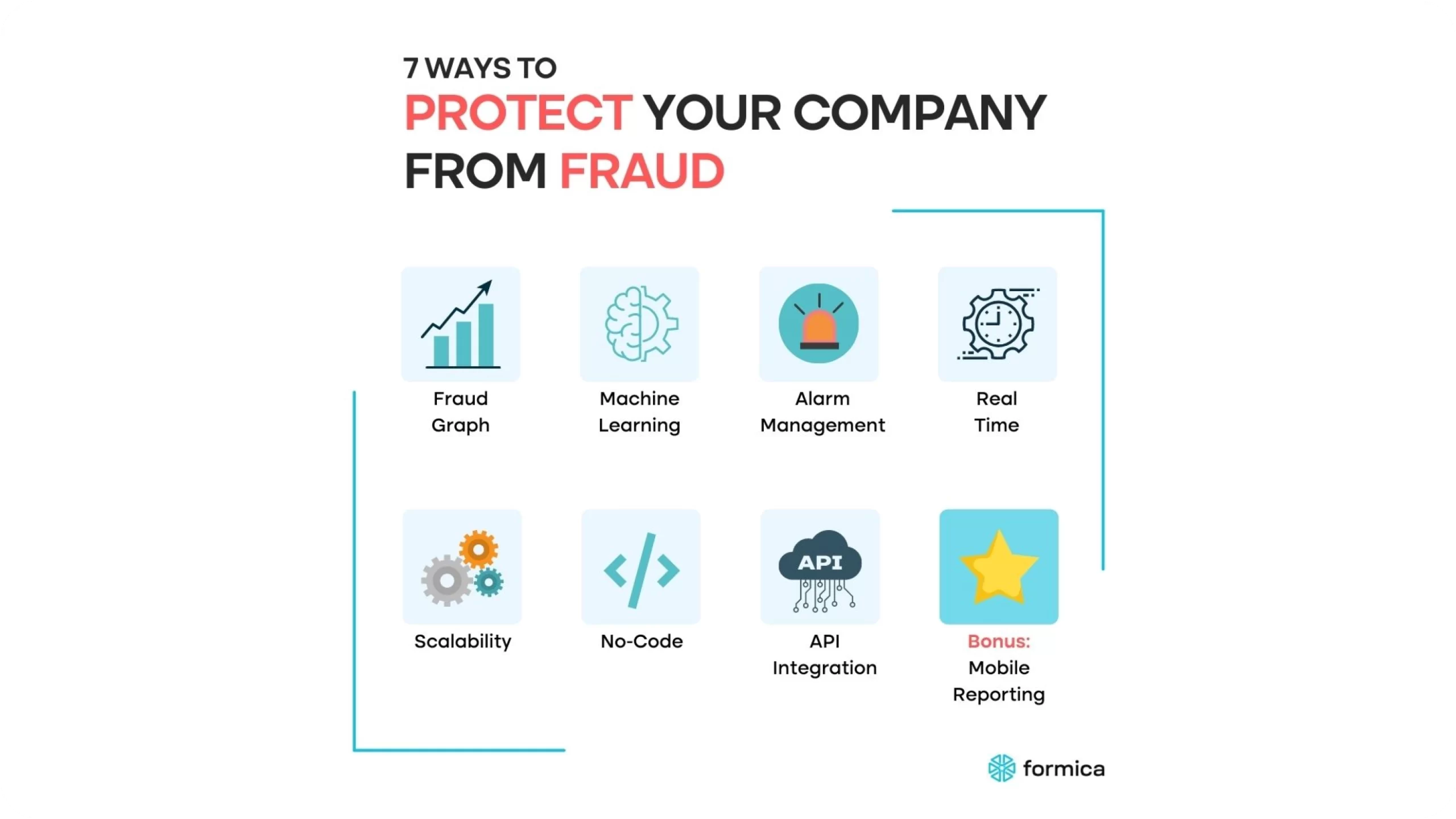
The Mechanics of Modern Fraud Detection
Fraud Graph Technology
Fraud graphs help businesses visualize relationships between users, transactions, devices, IP addresses, phone numbers, and email accounts.
Fraud graphs are highly effective for detecting:
- Fraud rings
- Money laundering networks
- Account sharing
- Organized fraud operations
By identifying hidden connections between entities, fraud graph databases provide deeper visibility into suspicious activities.
For example, graph databases can track the movement of funds across multiple accounts and organizations, making money laundering detection significantly more effective.
Machine Learning in Fraud Detection
Machine learning has become one of the most important technologies in fraud prevention.
Traditional rule-based systems alone are no longer sufficient because fraud patterns constantly evolve. Machine learning models analyze large datasets, identify behavioral anomalies, and adapt to new fraud techniques automatically.
Benefits of Machine Learning for Fraud Detection
Faster Fraud Detection
Machine learning systems process large transaction volumes instantly and identify suspicious activities much faster than manual reviews.
Reduced False Positives
AI-powered models improve accuracy by distinguishing legitimate customer behavior from genuine fraud attempts.
Behavioral Analysis
Machine learning detects abnormal behaviors by analyzing transaction histories, device activity, location data, and user interactions.
Continuous Learning
Modern AI models continuously improve by learning from new fraud cases and behavioral data.
Automated Alert Systems
Machine learning enables intelligent alarm management and real-time notifications for high-risk transactions.
Key Features of Modern Fraud Detection Systems
Real-Time Fraud Detection
Real-time fraud detection analyzes transactions instantly while they occur. Early detection minimizes financial losses and prevents fraud escalation.
Real-time systems allow businesses to:
- Block suspicious transactions immediately
- Reduce chargebacks
- Protect customer accounts
- Prevent account takeovers
Alarm Management
Comprehensive alarm management systems help fraud teams prioritize high-risk alerts and coordinate investigations efficiently.
Advanced alarm systems support:
- Email notifications
- SMS alerts
- Mobile notifications
- Workflow automation
- Automatic transaction blocking
Scalability
Scalable fraud detection platforms process millions of transactions per second without compromising performance.
Scalability is critical for:
- E-commerce businesses
- Financial institutions
- Payment providers
- Large enterprises
No-Code Fraud Detection
No-code fraud detection platforms allow non-technical teams to create workflows, rules, and automations without software development expertise.
Benefits include:
- Faster deployment
- Improved operational efficiency
- Easier rule management
- Lower technical dependency
API Integration and Flexibility
Modern fraud detection solutions must integrate easily with:
- Banking systems
- Payment gateways
- CRM platforms
- E-commerce systems
- Third-party data providers
API-driven platforms enable businesses to centralize risk management and analyze customer interactions across all channels.
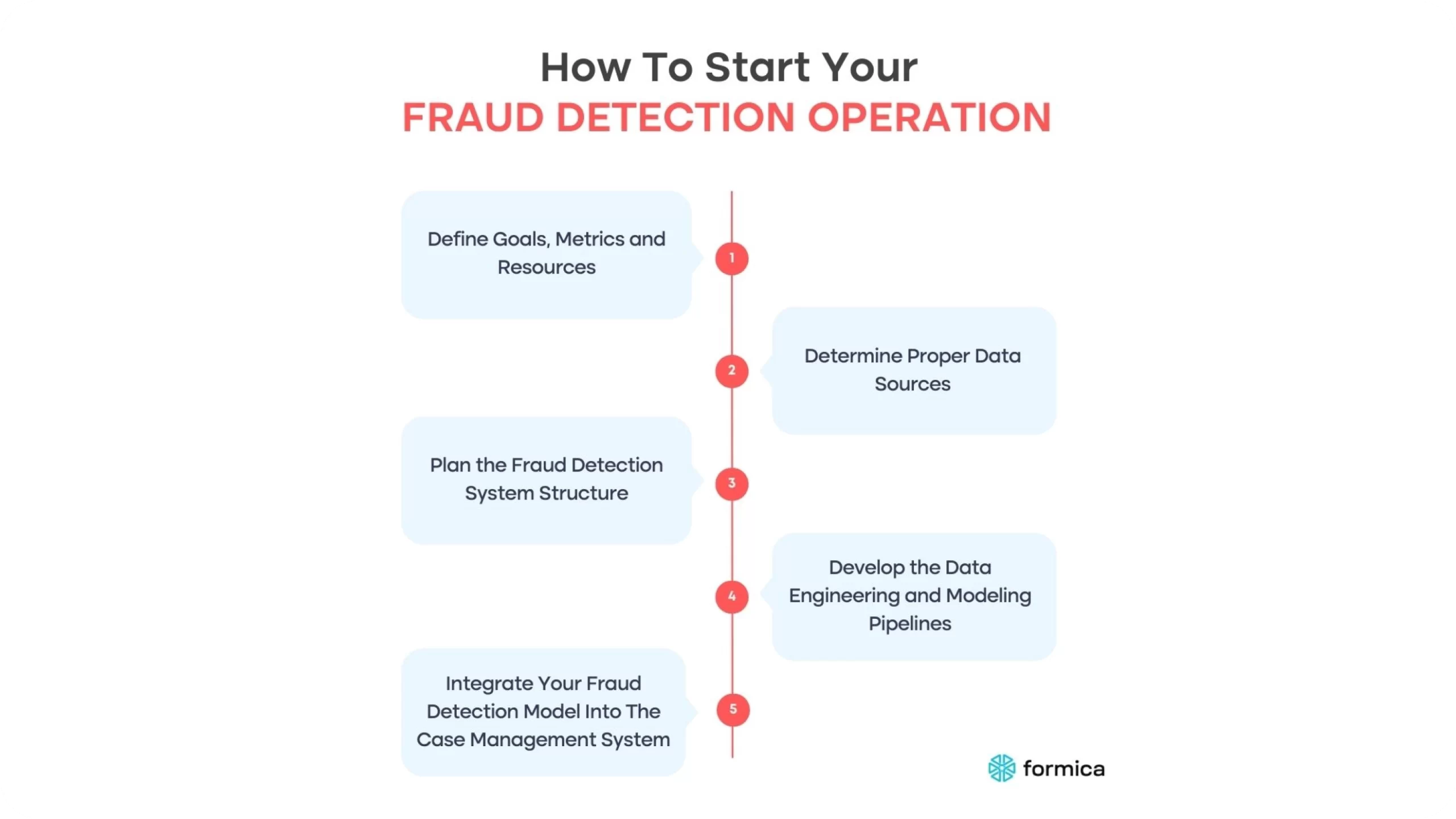
How to Start a Fraud Detection Operation
Define Your Goals
Before implementing fraud detection systems, businesses should identify:
- Fraud risks they face
- Types of fraud to detect
- Operational priorities
- Key performance indicators
- Available resources
Identify Data Sources
Fraud detection systems rely heavily on high-quality data.
Common fraud detection data sources include:
- Billing information
- Transaction history
- Customer profiles
- Device data
- Behavioral analytics
- Risk profiles
Build Fraud Detection Architecture
Businesses should design fraud detection systems that support:
- Real-time analysis
- Risk scoring
- Alert prioritization
- Case management
- Machine learning integration
Develop Data Engineering Pipelines
Effective fraud detection requires:
- Data aggregation
- Data cleaning
- Feature engineering
- Machine learning model training
- Continuous optimization
Integrate Case Management
Fraud detection systems should connect directly with case management platforms so analysts can investigate suspicious activities efficiently.
Risk scoring models help prioritize high-risk cases and improve investigation workflows.
Best Fraud Detection Tools

Several fraud detection platforms provide advanced protection for businesses across industries.
Formica AI
Formica AI is an AI-powered real-time fraud prevention platform offering:
- No-code workflows
- Machine learning models
- Fraud graph analysis
- Real-time monitoring
- Alarm management
- API integrations
- Scalable infrastructure
The platform serves industries including banking, fintech, e-commerce, and insurance.
Feedzai
Feedzai is an enterprise fraud prevention platform specializing in:
- Financial crime prevention
- Behavioral biometrics
- AML monitoring
- Omnichannel fraud management
- AI-powered analytics
SEON
SEON provides fraud prevention solutions with strong data enrichment and device fingerprinting capabilities.
Key features include:
- Social media lookup
- Email analysis
- Machine learning recommendations
- Risk scoring
Riskified
Riskified focuses primarily on e-commerce fraud prevention and chargeback protection.
Its solutions include:
- Account takeover prevention
- Transaction risk analysis
- Retail fraud protection
Sift
Sift is an enterprise-grade fraud detection platform offering:
- AI-driven fraud prevention
- Content integrity protection
- Account defense
- Payment fraud prevention
- Large-scale transaction analysis
Conclusion
Fraud continues to evolve alongside digital transformation. Businesses that fail to modernize their fraud prevention strategies face increasing financial, operational, and reputational risks.
Modern fraud detection systems powered by machine learning, fraud graphs, behavioral analytics, and real-time monitoring help organizations stay ahead of fraudsters while protecting customer trust.
To build an effective fraud prevention strategy, businesses should:
- Understand fraud risks
- Monitor transactions in real time
- Use scalable AI-powered solutions
- Continuously update fraud rules
- Reduce false positives
- Prioritize customer experience
As fraud techniques become more sophisticated, proactive fraud detection is no longer optional — it is essential for sustainable business growth and digital security.